


The most important voice in any boardroom isn’t the loudest one in the room
The most important voice in any boardroom isn’t the loudest one in the room
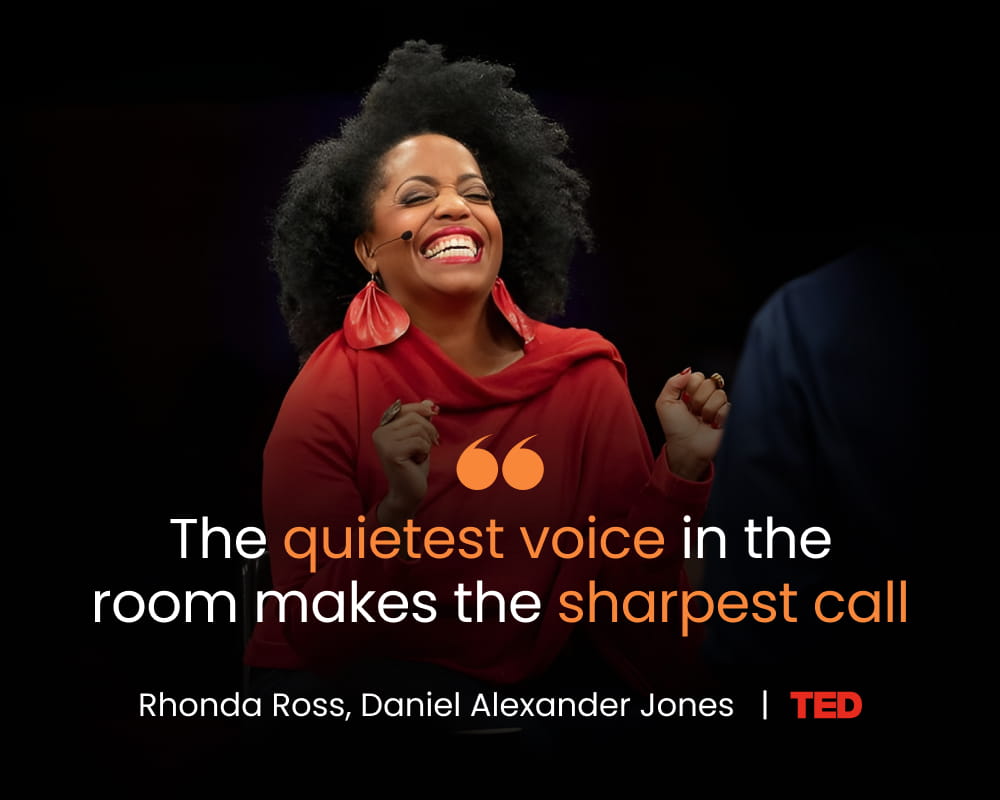
The most important voice in any boardroom isn't the loudest one in the room It's the one only you can hear. Rhonda Ross and Daniel Alexander Jones make a compelling case in their TED Talk: the inner voice isn't background noise. It's the filter through which every decision, every risk, every moment of doubt gets processed. Research backs this up. Studies on executive decision-making suggest that up to 70% of leadership failures trace back not to analytical gaps — but to unchecked cognitive biases and unexamined self-narrative. In finance and leadership, we spend enormous energy on technical training. We spend far less time auditing the internal narrator running beneath all of it. That narrator shapes how you read a difficult conversation. How you respond to a bad quarter. Whether you back yourself when it matters most. Ross and Jones argue that learning to tune this voice — not silence it, but direct it — is one of the most underrated forms of professional development available to us. Think of it as a signal-to-noise ratio problem: most high-performers are optimising the output while leaving the input unexamined. The highest-performing leaders don't just build stronger models. They build stronger metacognitive habits — the ability to observe their own thinking in real time. That's not a soft skill. That's a competitive edge. In an industry where clarity of judgment is the ultimate differentiator, it's worth asking: how much of your strategy is being quietly shaped by a voice you've never consciously examined? What would change for you if you could? 🔗 Source: https://www.ted.com/talks/rhonda_ross_daniel_alexander_jones_how_to_tune_your_inner_voice