


The most expensive item in your grocery cart might also be the most unnecessary one
The most expensive item in your grocery cart might also be the most unnecessary one
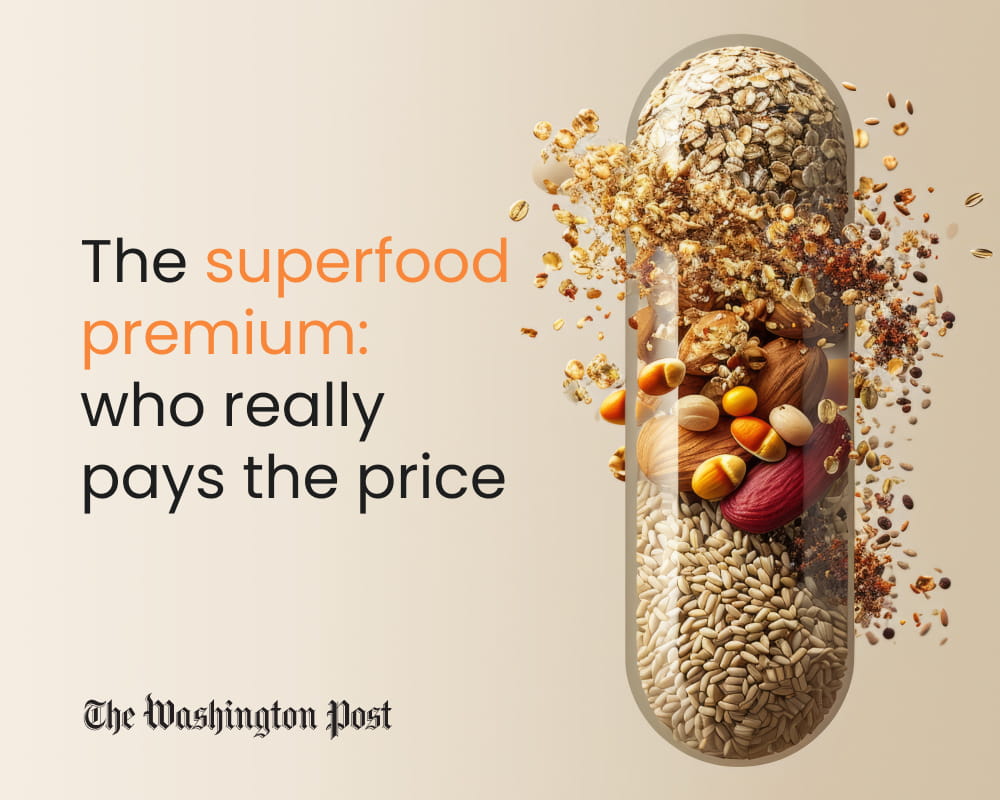
The most expensive item in your grocery cart might also be the most unnecessary one A Washington Post investigation found that many "superfoods" — açaí, goji berries, specialty seeds — offer no meaningful nutritional advantage over far cheaper staples like lentils, frozen spinach, or canned sardines. The price premium? 3–10x, driven almost entirely by branding and positioning, not biochemistry. Run the numbers and it gets harder to ignore. A household spending an extra £60/month on premium health products — a conservative middle estimate — is making a £720 annual decision based on label perception rather than nutritional evidence. Using the 50/30/20 budgeting framework, that £720 represents roughly 15–20% of a typical monthly "wants" allocation for a median UK household. Redirected, it covers a fully-funded emergency buffer in under six months, or compounds to approximately £9,800 over 10 years at a 7% average annual return. That's not a small rounding error. That's the gap between having a financial cushion and not having one. This is where the "price-quality heuristic" quietly erodes good financial decisions — the cognitive bias that leads us to assume higher cost signals higher value. In categories like wellness and nutrition, marketing budgets are often a more reliable predictor of shelf price than clinical evidence. Good financial tools should surface exactly this kind of gap: where perceived value and actual value diverge, and what the real cost of that difference is over time. What's one spending habit you revisited after seeing the actual numbers behind it? 🔗 Source: https://www.washingtonpost.com/climate-environment/2026/03/03/superfoods-secret-cheaper-alternatives/