


Most people are incredibly busy doing things that don’t matter to them
Most people are incredibly busy doing things that don’t matter to them
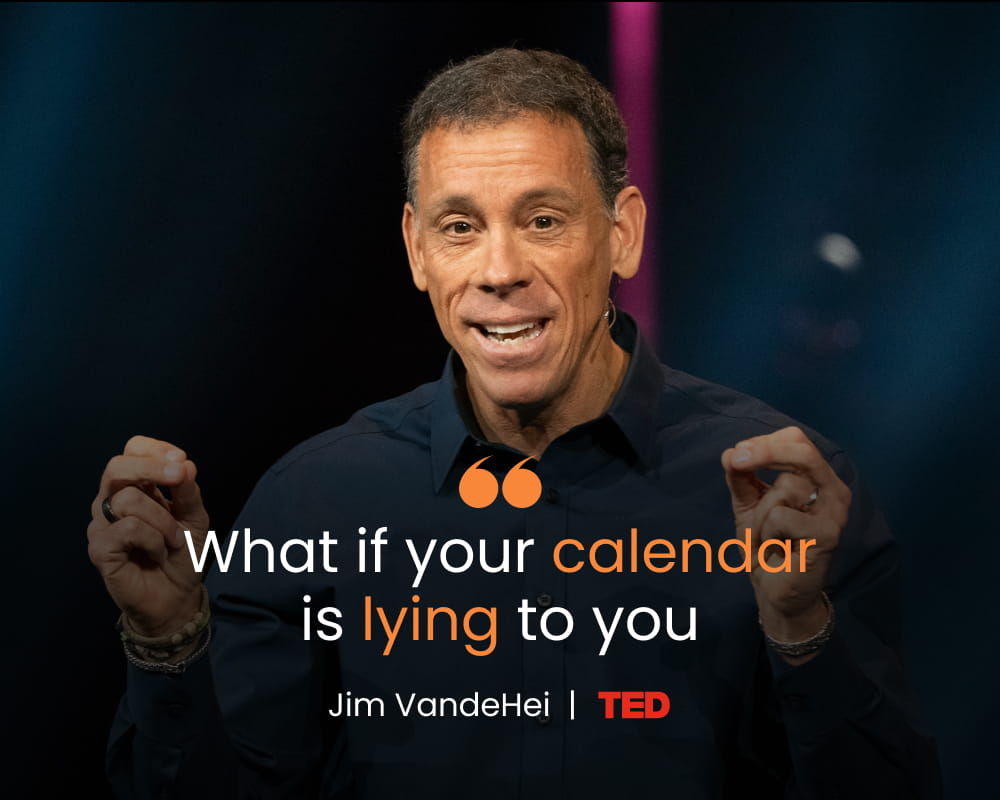
Most people are incredibly busy doing things that don't matter to them That's not a moral failing. It's a design flaw. Jim VandeHei's TED Talk doesn't offer a productivity hack or a morning routine. It offers something more uncomfortable: the suggestion that you already know what needs to change — you've just been too distracted, too accommodating, or too comfortable to act on it. Research backs this up. A McKinsey study found that knowledge workers spend just 39% of their time on role-specific tasks — the rest bleeds into low-value activity that feels productive but isn't. Meanwhile, Microsoft's Work Trend Index reports that 68% of people say they don't have enough uninterrupted focus time during the workday. We're not time-poor. We're allocation-poor. VandeHei's five decisions aren't a framework for doing more. They're a framework for doing less — better. That distinction matters. For anyone working in finance or business, the parallel is hard to ignore. We apply rigorous frameworks to capital allocation — IRR thresholds, portfolio concentration limits, opportunity cost analysis — but rarely run the same discipline on our time. The misallocation there compounds quietly, and the losses are rarely visible on any dashboard. Warren Buffett keeps 80% of his calendar unscheduled. Not because he has nothing to do — because he understands that the highest-returning asset he manages isn't Berkshire's portfolio. It's his own attention. The best investors know that what you choose not to hold is just as important as what you do. Position sizing applies to your weeks, not just your holdings. So here's the question worth sitting with: if you applied the same decision criteria to your time as you do to your best investments — minimum viable return, clear exit conditions, and a long holding horizon — what would you cut first? 🔗 Source: https://www.ted.com/talks/jim_vandehei_5_practical_ways_to_take_control_of_your_life